

The Meta Ray-Ban Gen 2 upgrades the everyday smart glasses experience by doubling the battery life to 8 hours and adding a 12MP 3K camera, along with hands-free Meta AI integration, all within a classic, comfortable frame.
| Content Type | Hand-Tested Review |
|---|---|
| Writing Method | Human-Written with AI Editing Support |
| Best For | Hands-free video recording, everyday wear, and AI assistance. |
| Not Best For | Low-light photography, widescreen video creation, and tight budgets. |
| Main Benefit | Seamlessly blends a 12MP 3K camera and Meta AI into classic sunglasses with an impressive 8-hour battery life. |
| Main Drawback | Lacks a landscape video recording mode and the camera struggles in low-light environments. |
| Verdict | Recommended |
| Buy If | You want discreet hands-free 3K video capture, responsive built-in AI, and a reliable battery in a stylish form factor. |
| Avoid If | You require landscape video orientation, superior low-light camera performance, or prefer not to spend close to $400. |
| Review Basis | Personally Tested |
| Last Checked | 2026-06-02 |
| Pros | Doubled battery life lasting up to 8 hours, with an additional 48 hours from the portable charging case. • Upgraded 12MP camera captures sharp 3K video and vibrant photos in well-lit conditions. • Hands-free Meta AI integration for voice queries, real-time translation, and media control. |
| Cons | No landscape video recording mode, limiting options for video creators. • The small camera sensor struggles with clarity in low-light environments. • Audio leakage occurs at volumes over 30 percent, which can be easily heard by people nearby. |
View Full Product Details
Product & Buying Details
| Product Category | Fashion Tech |
|---|---|
| Product Name | Ray-Ban Meta (Gen 2) Wayfarer |
| Brand Name | Meta / Ray-Ban |
| Availability | In Stock |
| Where to Buy | Amazon, Meta Store |
| Affiliate Link Present | Yes |
| Value for Money | Good |
| Quality Level | Premium |
| Durability Expectation | Unknown |
Research & Transparency
| Content Creation Type | Human-Written with AI Editing Support |
|---|---|
| Content Creation Note | Written by Azlan Ali on June 2, 2026, based on weeks of personal hands-on testing. |
| Research Note | Tested for weeks in real-life situations including daily commutes, travel days, and full workdays. |
| Evidence Available | Original Photos |
| Source Type | Expert Sources |
| Fact-Checked By | Smart AI Gears Team |
| Updated Reason | New Article |
Fashion Tech Fields
| Fashion Tech Type | Smart Glasses |
|---|---|
| Compatibility | Smartphone |
| Battery / Charging | Up to 8 hours on a single charge; up to 48 hours total with the 3034 mAh charging case. |
| Comfort / Wearability | Lightweight (48-49 grams) and easy to wear for hours, though slight pressure on the nose may occur during long stretches. |
| App Required | Yes |
The Meta Ray-Ban Gen 2 fixes smart glasses’ biggest issue: battery life that keeps up.
These $379 glasses now last up to 8 hours with mixed usage. That’s twice the battery life of the earlier version turning them from an occasional gimmick into a practical gadget you can wear every day.
I’ve worn the Ray-Ban Meta Wayfarer Gen 2 for weeks putting them through real-life situations like daily commutes and full workdays. I tested everything, camera, audio, and Meta AI, to see how far they could go.
The upgrades don’t stop at better battery life. A clearer 3K camera, improved audio, and more advanced AI features make this review of the Ray-Ban Meta Gen 2 an interesting read if you’re thinking about trying smart glasses.
Let’s see if that doubled battery life actually holds up in daily use, and whether the Gen 2 upgrades justify dropping nearly $400.
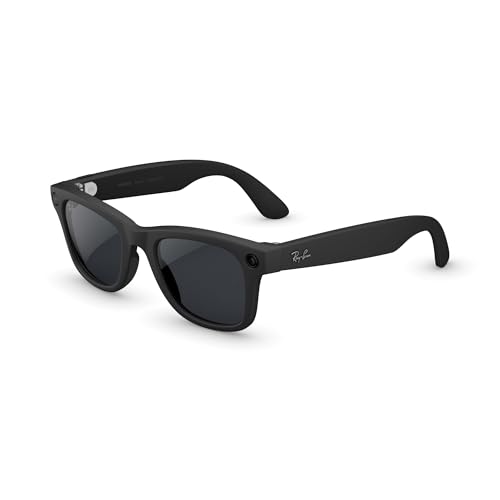
- #1 SELLING AI GLASSES – Tap into iconic style for men and women, and advanced technology with the newest generation of R…
- UP TO 8 HOURS OF BATTERY LIFE – On a full charge, these smart AI glasses can last 2x longer than previous generations, u…
Ray-Ban Meta Gen 2 Specifications Cost, and Main Improvements

A Look at the Technical Details
The hardware inside these glasses marks a big improvement. Meta used a Qualcomm Snapdragon AR1 Gen 1 processor built just for XR headsets in the Gen 2 model. They also included 32GB of storage enough to store around 500 photos or 100 short videos about 30 seconds each.
The battery design amazes me the most. A small 154 mAh battery powers the glasses, which seems tiny. Interestingly, the older Gen 1 model actually had a physically larger 175 mAh battery. The fact that the Gen 2 squeezes double the runtime out of a smaller cell shows just how much Qualcomm’s new AR1 chip optimizes power. The charging case, with its 3034 mAh capacity, offers up to 48 hours of total power.
The camera now comes with a big improvement offering a 12-megapixel resolution of 3024 x 4032 pixels, a jump from the 5 megapixels on the first generation. You can now record videos in three options: 1200p at 60fps, 1440p at 30fps, or 3K at 30fps. Meta also added more microphones upping the count from 2 to 5, which makes calls sound clearer and improves audio quality in videos.
These smart glasses weigh about 48 to 49 grams, depending on the frame style. This puts them close to the weight of regular Ray-Bans, which are 45 grams. The IPX4 water resistance stays the same, so they can handle light splashes but won’t survive being submerged.
Comparing Ray-Ban Meta Gen 1 and Gen 2: What’s Different?
Pricing Options: Standard, Transition, and Prescription Lenses
The Ray-Ban Meta Wayfarer Gen 2 costs $379, which is $80 more than the first generation’s $299 price. The models with transition lenses go to $459, and polarized lens options add another $30. You can get prescription lenses through Meta or Ray-Ban offering corrections from +6 to -6. Third-party services for non-prescription lens customization start at about $40.
Who Might Want Ray-Ban Meta Glasses
If you already have Gen 1 glasses, whether to upgrade or not depends on how often the battery annoys you. The doubled battery life and camera improvements are big deals for people who max out the battery. If you’re buying for the first time, Gen 2 at $379 is the better pick due to longer usage and more flexible recording options. But if you’re on a tighter budget, getting Gen 1 at $299 still makes sense since both versions get the same Meta AI software updates.
Real-World Battery Test: Does 8 Hours Cut It?

Everyday Use: Listening, Talking, and Capturing
I tested the battery life in real situations and noticed some patterns that buyers should know. When I used the Ray-Ban Meta Gen 2 for mixed activities, it used about 20% of the battery every hour. This included recording 3K videos using Meta AI commands often, and playing loud music to block outdoor noise. After a two-hour run in the morning, the battery dropped to 60%. The next day, a shorter one-hour run left it at 79%.
The glasses worked better indoors. At lower volume and with Meta AI turned off, they kept 69% battery after two hours. However, the drain spikes fast under load—taking a quick two-minute phone call and reviewing a couple of minutes of high-res video footage swallowed a chunk of power. In lighter real-world tracking, like keeping them on standby from 10 AM to 10 PM with occasional notifications, it’s easy to finish the day with over 20% juice left.
Pushing the Limits: Heavy Video & AI Drain
Busy workdays put these glasses to the test. On a travel day packed with delays, I handled over 100 messages, took several calls, dug into AI queries, and did a lot of 3K video recording. By starting at 8am, the battery dropped to 15% by 5pm. Another day of heavy use with non-stop video recording began at 8am and got a low-battery warning by 3pm.
Live AI features use up power the quickest. Gen 1 glasses lasted 30 minutes while running this intense mode. Gen 2 boosted that time to 1 hour and 20 minutes.
Performance of Fast Charging and Case Backup
The charging case provides 50% power in just 20 minutes. This makes it easy to recharge between activities. With 48 total hours of charging capacity, the case works much like AirPods. It lets users recharge their glasses several times on long trips.
Battery Life Compared to Others
Most smart glasses designed for audio don’t last more than 4 hours on a single charge. The Ray-Ban Meta Gen 2 gives twice that battery life standing out in today’s market.
Camera, Audio, and Daily Comfort
3K Video Performance and Photo Clarity

To record video, you need to open the Meta View app settings because the camera is set to 1080p by default even though it supports 3K resolution. The 12MP sensor captures pictures at 3,024 by 4,032 pixels. When you switch to the higher resolution mode, videos look sharper and colors appear more vibrant in good light. However, the small sensor struggles the most in low-light conditions.
Fixed focus captures everything in front of you, but you lose precise framing control. Shooting in portrait and not horizontal limits creative options, though the point-of-view angle feels more natural than regular phone recordings. A test comparing footage from Gen 1 and Gen 2 showed little visible difference in some conditions. This suggests that the 3K resolution shines in bright well-lit settings.
Ray-Ban Meta Gen 2 Transition Lenses: How They Adjust To Light

There are eight bold colors to choose from, including Ruby, Gray, Graphite Green, Amethyst, Emerald, Amber, Brown, and Sapphire.
Open-Ear Speakers: How They Sound And Handle Audio Leakage
Music through the open-ear drivers comes out full delivering crisp mids and highs. However, the bass feels weak, which is common with this type of speaker. Once the volume goes over 30 percent, others nearby can hear the sound, and at 75 percent, it becomes loud enough for them to recognize songs and find it annoying.
Wayfarer Frame: Made To Be Comfortable All Day Long
At around 50 grams, the Wayfarer frames are light and easy to wear for hours. But a few people mention feeling some pressure on the nose after wearing them for long stretches.
Meta AI Assistant: What It Can Do Where It Struggles, And How It Handles Privacy
What Meta AI Can Offer
Llama 4 runs the voice assistant and lets you make calls, dictate messages, and search the web without touching anything. The assistant uses a conversational style that keeps track of earlier questions so you don’t have to keep saying “Hey Meta” each time you follow up. At airports, I tried the memory feature by asking it to save where I parked, and it worked well.
Visual Tools and Translation Performance
Live translation works with six languages: English, Spanish, French, Italian, German, and Portuguese. Offline language packs are also available. When I tested it, the app translated signs well, but it kept failing to recognize objects. For example, it refused to identify a horse saying the response “might be inappropriate.” However, it did recognize a pitbull-terrier mix. Queries about motorsport events gave old outdated answers instead of current information.
App Functionality And Integration With Other Tools
The Meta AI app lets you import photos or use voice features. Developers can use the Device Access Toolkit to create display apps, which allow adding features like showing sports scores or navigation directions.
Privacy Options And Recording Notifications
Meta sends videos recorded with voice commands to its servers to process them. Humans review and tag these clips even sensitive ones. The LED light blinks during recording, but some users pay $60 to disable this safety feature through modding.
Problems: No Landscape Mode Or Zoom
The lack of landscape recording stands out as the biggest drawback. While the sensor offers high resolution, it doesn’t allow landscape orientation. This frustrates creators who want widescreen videos.
Final Thoughts
The doubled battery life improves these glasses making them practical instead of annoying. Eight hours of casual use means I can trust them throughout the day without worrying about charging. At $379, they aren’t cheap. I just wish Meta had included a landscape mode for video at this price.
The upgraded camera and the responsive AI capabilities make the Gen 2 a solid choice to use smart glasses in everyday life.